

As a temporary foreign worker (TFW) in Quebec, it is important to understand the different amounts that appear on your pay stub. One of these deductions is Quebec provincial income tax, which your employer withholds directly from your pay. This withholding is part of Quebec’s tax system and serves as an advance payment toward the income tax you may ultimately owe to the Government of Quebec.
What is Quebec provincial income tax?
Quebec income tax is a tax administered by Revenu Québec on taxable income earned by individuals who are subject to Quebec’s tax system. When you work as an employee in Quebec, your employer generally has to calculate and withhold an amount from your pay to cover this tax. That is why you may see a line on your pay stub labeled “Quebec tax,” “Quebec income tax,” “Provincial tax,” or something similar.
This amount is not a fee charged by your employer. It is part of your wages that your employer withholds and then remits to Revenu Québec.
Why is it deducted from every paycheck?
Income tax is calculated for the entire tax year. However, when you are an employee, income tax is generally withheld gradually throughout the year, directly from each paycheck. To determine the amount to withhold, your employer uses the rules and tables established by Revenu Québec. The calculation takes into account factors such as your income, how frequently you are paid, and the tax information you have provided to your employer.
For example, if you are paid every two weeks, you may see a Quebec income tax deduction on each of your pay stubs.
Important: the amount withheld from each pay stub does not necessarily represent the final amount of tax you will owe for the year.

How is the amount withheld determined?
The amount withheld depends on several factors, including:
- your income;
- how frequently you are paid;
- certain tax credits or deductions;
- the information provided on the applicable tax forms;
- your tax situation.
Quebec uses different income tax brackets. In 2026, the Quebec income tax rates are:

These rates are progressive. This means that if you earn more than $54,345, you do not pay 19% on your entire salary. The applicable rate applies only to the portion of your income within each tax bracket.

What is the difference between Quebec income tax and federal income tax?
It is very common to confuse these two deductions because both may appear on your pay stub. The main difference is the level of government that administers each tax:
- Federal income tax: applies at the federal level and is administered by the Canada Revenue Agency (CRA).
- Quebec income tax: applies at the provincial level and is administered by Revenu Québec.
Therefore, if you work in Quebec, you may see two different income tax deductions on your pay stub: one federal and one provincial.
Is Quebec income tax the same as QPP or QPIP?
No. Several deductions may appear on your pay stub, but each serves a different purpose. For example:
- Quebec income tax: provincial income tax.
- QPP – Quebec Pension Plan: contribution to the Quebec Pension Plan.
- QPIP – Quebec Parental Insurance Plan: contribution to the parental insurance plan.
- EI – Employment Insurance: contribution to Employment Insurance.
- Federal income tax: federal income tax.
It is important not to confuse these amounts because they are not calculated in the same way and do not fund the same programs.
Do temporary foreign workers also have to pay Quebec income tax?
Yes. In general, a temporary foreign worker who works in Quebec and receives taxable employment income may be subject to provincial income tax withholdings. However, having a temporary work permit does not, by itself, determine your tax situation.
Your tax obligations may depend on several factors, including your income, your tax residency status, and the specific circumstances of your employment. Being a TFW therefore does not automatically mean that you are exempt from Quebec income tax.

Is the amount withheld the final tax you will have to pay?
Not necessarily. As with federal income tax, the amounts shown on your pay stub are tax withholdings at source.
When you file your income tax return, Revenu Québec determines your tax situation based on your income, the amounts already withheld, and any credits or deductions you may be entitled to claim.
As a result, you could:
- receive a refund if too much tax was withheld;
- have a balance owing if not enough tax was withheld;
- or have little or no balance in either direction.
That is why it is important to keep your pay stubs and tax documents.
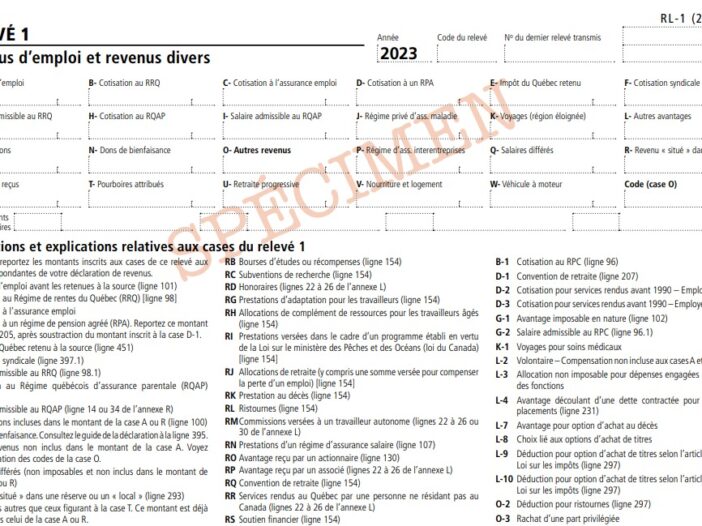
What document do you receive at the end of the year?
If you work in Quebec, your employer will generally provide you with a Relevé 1 (RL-1). This document contains information about your employment income and certain amounts withheld. The information on the RL-1 is used to complete your Quebec income tax return. It is therefore important to check that the information on your RL-1 matches your payroll documents and to keep the slip for your tax return.
What should you check on your pay stub?
Each time you receive your pay, check the following:
- Your gross pay: the amount you earned before deductions.
- Federal income tax: the amount withheld for federal income tax.
- Quebec income tax: the amount withheld for provincial income tax.
- Other contributions: QPP, QPIP, and EI, when applicable.
- Your net pay: the amount you actually receive after all deductions.
Checking these amounts can help you better understand your pay and identify a possible payroll error more easily.

What happens when you file your tax return?
At the end of the tax year, you must file an income tax return if you are required to do so. You report your income and the amounts of tax already withheld during the year. Revenu Québec uses this information to determine your tax situation.
If you worked in Quebec and did not receive your RL-1, you should contact your employer to obtain it. Therefore, the Quebec income tax shown on each of your pay stubs should not be confused with the final result of your income tax return.
As a TFW in Quebec, understanding the provincial income tax shown on your pay stub helps you better understand how much of your salary is being withheld and how much you actually receive. Quebec income tax is an amount withheld by your employer and remitted to Revenu Québec. The amount withheld may vary depending on your situation and does not necessarily correspond to the final amount of tax you will owe when you file your income tax return.
If you have questions about your specific tax situation, you can consult Revenu Québec directly or seek advice from an authorized tax professional. InfoTET d’Immigrant Québec provides information and support to temporary foreign workers in Quebec.