
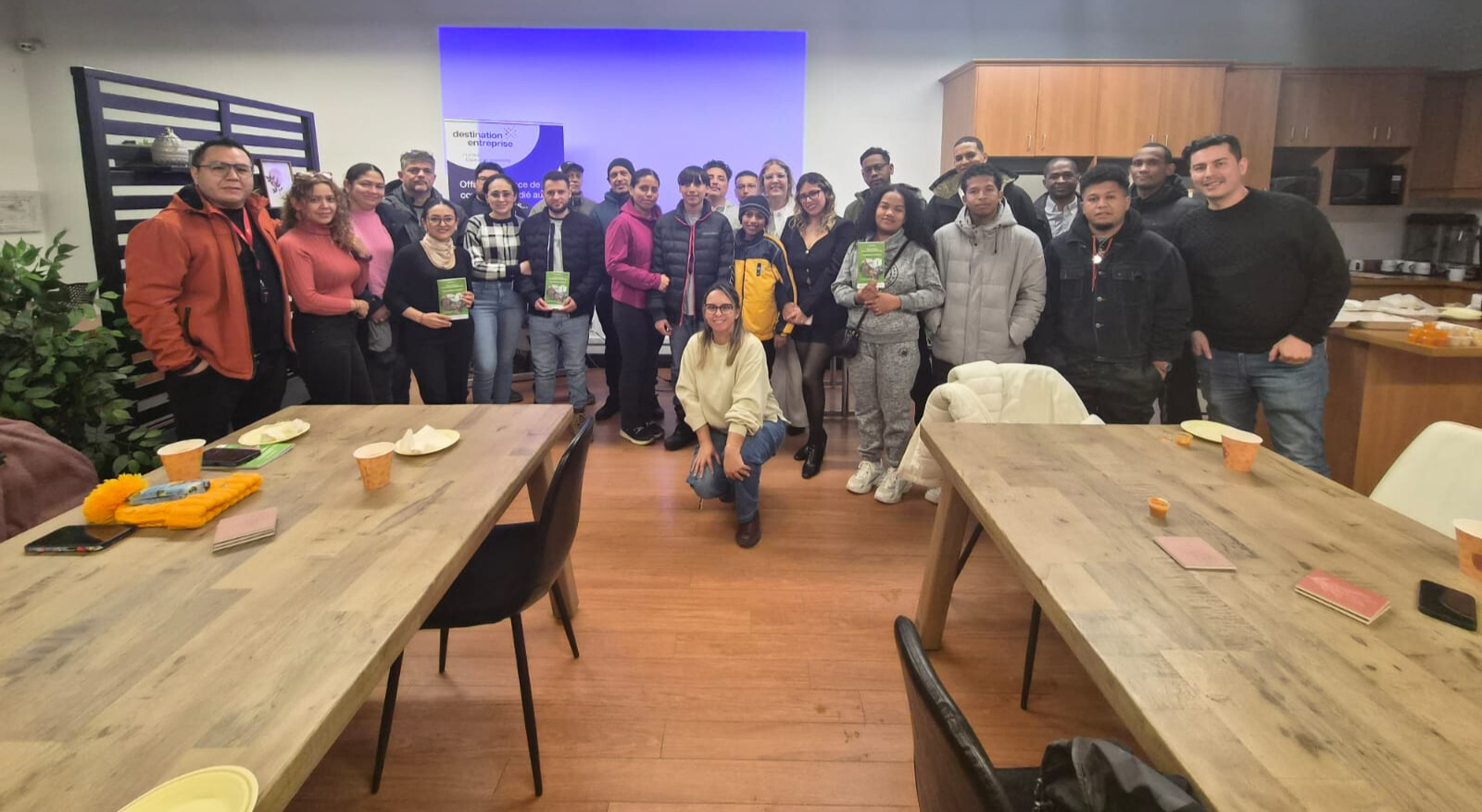

On February 27, 2026, an information session on taxes for temporary foreign workers (TFWs) was held in Victoriaville, organized by (CDEVR) Destination Entreprise de Victoriaville et de sa région. The activity brought together several workers from Colombia, Mexico, Peru, and Madagascar, who attended to better understand how the Canadian tax system works.
During the session, participants received clear and practical information about the Canadian tax system, including annual income tax filing, required tax documents, possible refunds, and key elements to consider in order to avoid errors or confusion during tax procedures.
To facilitate understanding, the activity was held in two separate rooms: one for French-speaking participants and another for Spanish-speaking participants, allowing explanations to be adapted to the participants’ language and encouraging more accessible discussions.
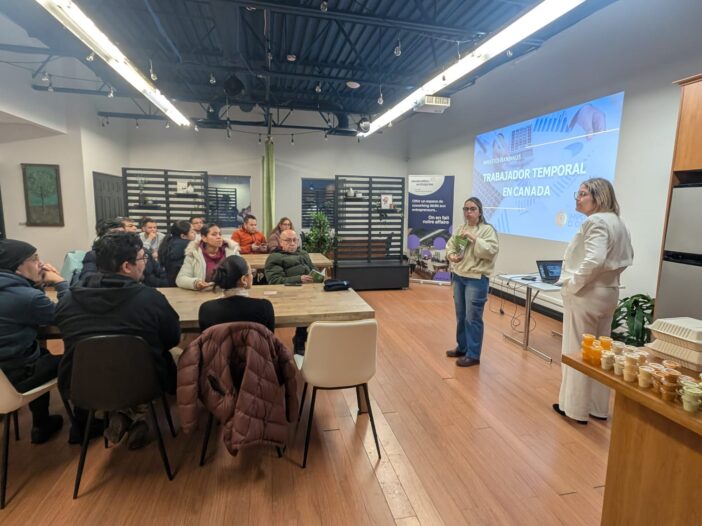
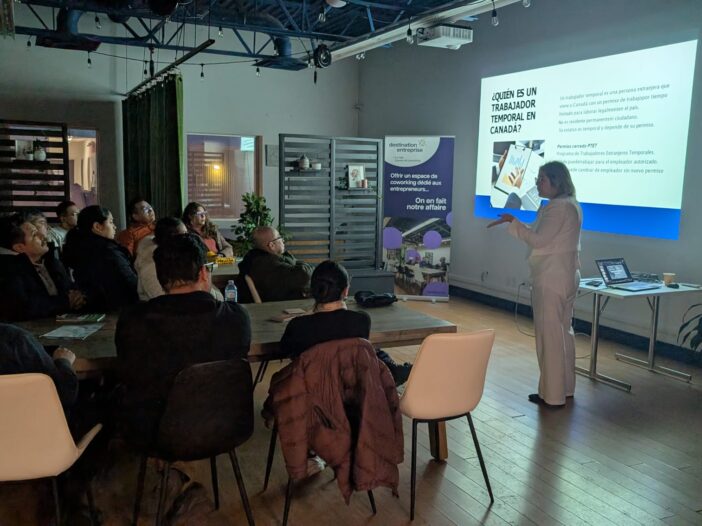
At the end of the presentation, a question-and-answer period took place, which proved especially useful for the workers. Among the topics discussed, participants were able to clarify which receipts or expenses can be included in a tax return and which cannot. One worker also sought to understand why he and four Mexican colleagues—who arrived in Canada on the same day and hold the same position with the same salary—received different refunds in their last tax return. The specialists explained that these differences may depend on several factors, such as the number of hours worked, overtime, or other elements specific to each individual’s tax situation.
The session proved to be highly beneficial both for newly arrived workers and for those who have been in Canada for two or three years, as it helped answer many questions and strengthen their understanding of their tax obligations.
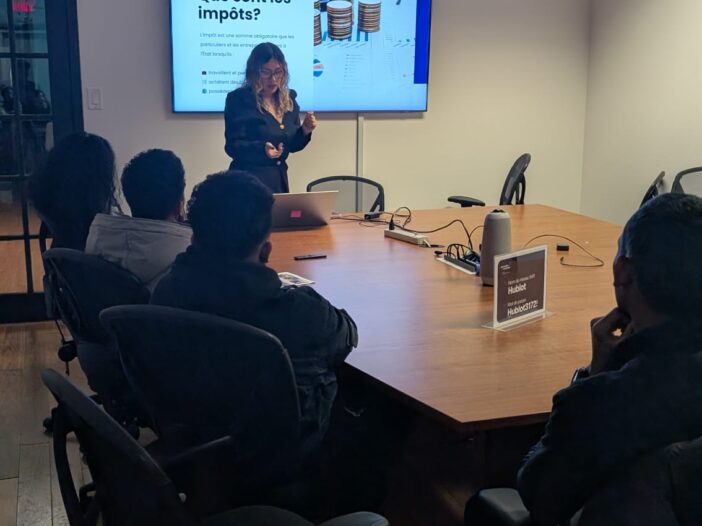
This type of activity aims to inform temporary foreign workers about their tax responsibilities in Canada, as many are not familiar with how the system works. By providing clear and accessible information, the goal is to promote their autonomy, reduce stress related to administrative procedures, and support their social and economic integration.
During the activity, Jonathan Buitrago, regional coordinator of InfoTET at Immigrant Québec, took the opportunity to present the InfoTET Québec program and distribute the information guide for TFWs, providing practical information and useful tools to better understand their rights, obligations, and available resources. This direct exchange helped answer questions, hear participants’ experiences, and better identify their needs, thereby strengthening InfoTET’s mission to provide clear and useful information to TFWs during their stay in the province.
From InfoTET’s perspective, this type of initiative represents an important opportunity for workers to access reliable and useful information, enabling them to approach their administrative processes with greater confidence during their stay in the province.
Finally, we would like to especially thank Viviana Sanchez from (CDEVR) Destination Entreprise de Victoriaville et de sa région, as well as the accountants present, whose clear and detailed explanations contributed significantly to the success of this activity.