

If you are a Temporary Foreign Worker (TFW) holding a closed work permit, you have the right to a safe workplace. If you are injured while performing your job, it is important to act quickly to protect your health and exercise the rights provided under Quebec law.
What is a workplace accident?
A workplace accident is an unexpected and sudden event that occurs while performing your job duties or as a result of your work and causes a physical or psychological injury.
Some examples include:
- Slips, trips, or falls in the workplace.
- Cuts or amputations caused by machinery or tools.
- Burns.
- Injuries caused by objects or equipment.
- Injuries while lifting or moving heavy loads.
- Accidents that occur while performing tasks assigned by your employer.
What should you do if you have a workplace accident?
1. Report the accident immediately : Notify your supervisor or employer as soon as the accident happens, even if the injury seems minor. Reporting the accident right away helps protect your rights and makes the CNESST claims process easier.
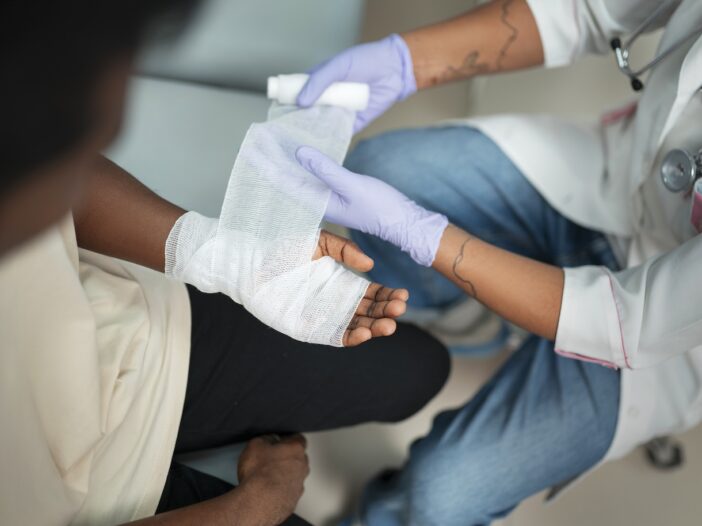
2. Seek medical attention as soon as possible : Go to a clinic or hospital and tell the healthcare provider that your injury happened at work. Ask the healthcare professional to complete the CNESST Attestation médicale. This document is essential for your claim. If it is an emergency, such as a fracture, amputation, serious injury, or severe bleeding, seek immediate medical care.
3. Give the medical certificate to your employer : Provide your employer with a copy of the Attestation médicale or your medical certificate so they can complete the required procedures.
4. File a claim with the CNESST : If your injury prevents you from working, requires medical treatment, or results in expenses related to the accident, you should file a Worker’s Claim with the CNESST. You can do this online through MonEspace CNESST or by using the official claim form.
How do you complete the Worker's Claim?
Before you begin, gather the following information:
- Your full name and contact information.
- Your Social Insurance Number (if you have one).
- Your employer’s name and address.
- The date, time, and location of the accident.
- A clear description of how the accident happened.
- The body part that was injured.
- Information about the doctor or healthcare facility that treated you.
- Your Attestation médicale, if you have already received it.
Clearly describe what happened : In the section where you explain the accident, include:
- The task you were performing.
- How the accident happened.
- What caused the injury.
- Which part of your body was injured.
Describe only the facts in a clear and chronological order.

If your claim is accepted

Depending on your situation, the CNESST may provide:
- Medical care related to your injury.
- Rehabilitation treatments and services.
- Reimbursement of certain authorized expenses.
- Income replacement benefits if you are unable to work.
- Other benefits provided under Quebec legislation.
Having a closed work permit does not prevent you from filing a claim for a workplace accident. If your injury occurred while performing your job duties, you may be entitled to benefits under Quebec law.
Some newly arrived Temporary Foreign Workers have not yet received their RAMQ health insurance card. This does not eliminate their rights if they are injured at work.
If you are injured on the job, seek medical attention as soon as possible and inform the healthcare provider that your injury is work-related. Then file your claim with the CNESST so it can review your case and determine the benefits you may be entitled to.
After a workplace accident, every step matters: notify your employer, receive medical care, and file your claim with the CNESST.
Acting quickly can help you access medical care, protect your rights, and allow the CNESST to assess your claim as soon as possible.