
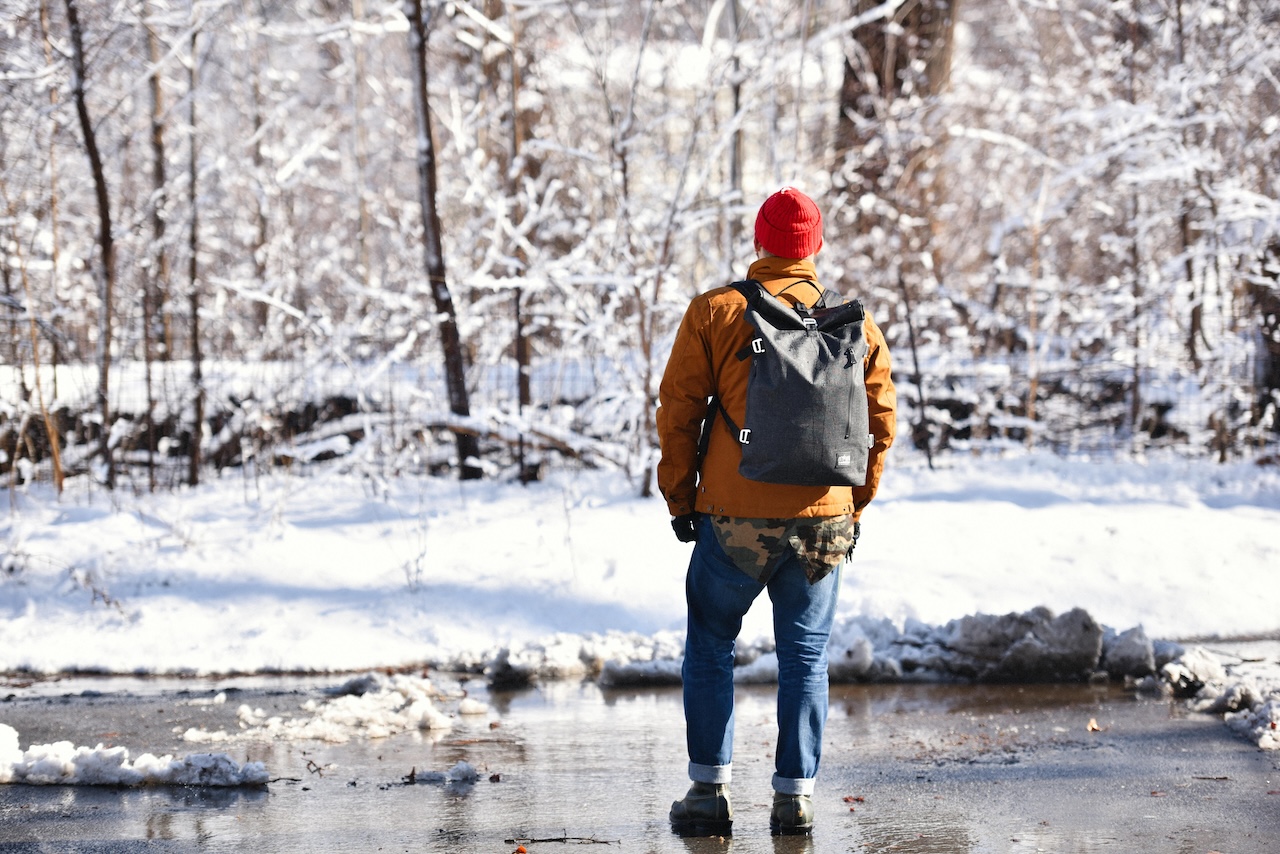

Winter in Quebec can be challenging, especially for those coming for the first time as Temporary Foreign Workers (TFWs). If you have lived here before, you already know what it’s like: intense cold, snow, and sudden temperature changes. For newcomers, there is no need to worry: with proper information and preparation, it is possible to stay safe, warm, and enjoy the season.
In Quebec, temperatures vary greatly depending on the season and region:
- November and December: the cold begins to set in; ice and snow appear, and sometimes there are even storms.
- January and February: the coldest months, with wind chill potentially dropping below -40°C (-40°F). However, the days are often sunny, which helps cope with the cold.
- March to May: snow is still present, but temperatures are milder.
- June to October: the weather is warm, with temperatures in July and August often exceeding 30°C (86°F), especially with humidity.



To stay comfortable and safe, InfoTET recommends that TFWs have:
- A high-quality winter coat;
- Hat, gloves, and scarf;
- Insulated and waterproof boots;
- Thick socks;
- A good heating system in the home (if it doesn’t work properly, ask the landlord to adjust it);
- Warm blankets for the night.
Frostbite can affect skin exposed to the cold, especially on extremities: ears, fingers, toes, nose, and cheeks. To prevent it:
- Dress warmly if you’ll be outside for a long time;
- Go inside a warm area every 30 minutes;
- Make sure your colleagues are also staying protected;
- Signs of frostbite: numb or tingling skin, red then white, with small swellings;
- If you suspect frostbite, call 811 (Info-Santé 811 is a free and confidential telephone consultation service);
While waiting for professional help, stay out of the cold, remove wet clothing, and apply warm water to the affected area; do not smoke or drink alcohol, as this can lower body temperature.
Winter is a time of year that presents many physical and emotional challenges. Short, cold days affect energy and mood, which can lead to sadness, fatigue, and lack of motivation. Health can also be impacted, especially for people with chronic conditions. Taking care of your body and mind is essential during this season.
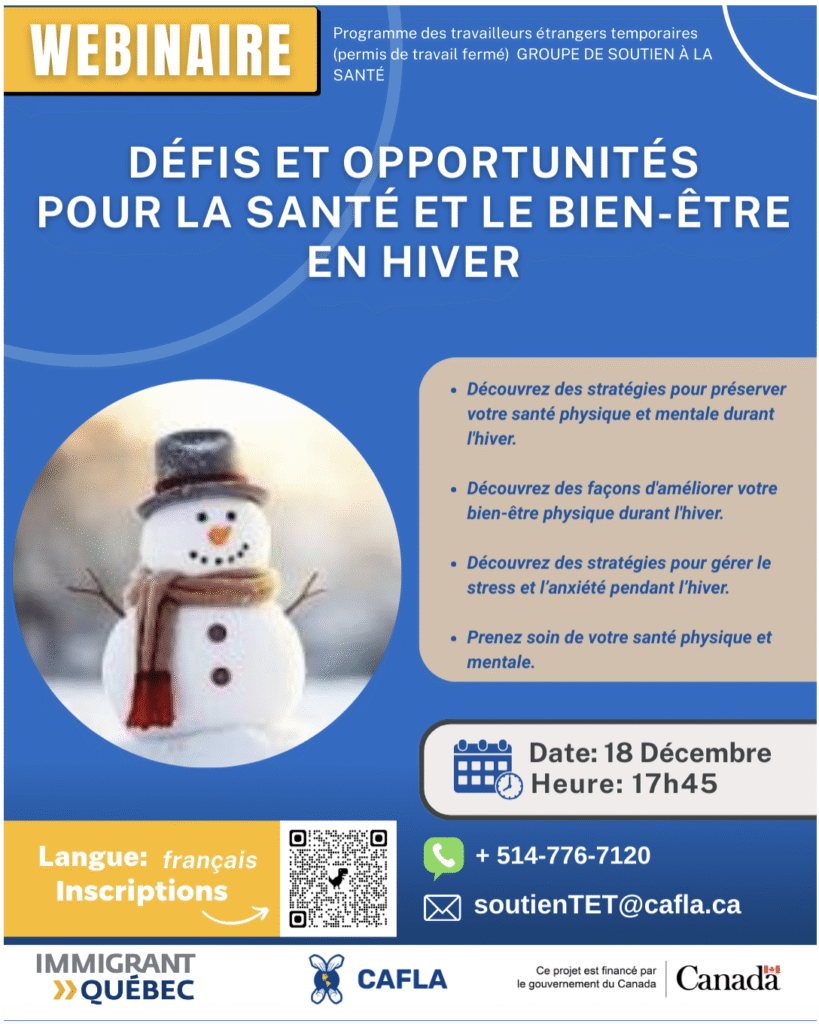
Don’t forget that on December 18, a webinar organized by the Centre d’aide aux familles latino-américaines (CAFLA), a PSTM organization, will cover the topic: “Challenges and Opportunities for Health and Well-Being in Winter for Temporary Foreign Workers.”
At InfoTET d’Immigrant Québec, our goal is to inform and support TFWs so they can adapt and fully experience life in Quebec. Sharing information about the climate, safety, and health in winter, as well as providing resources and tools, is part of our commitment to facilitate integration and daily life in the province, ensuring that every temporary foreign worker feels prepared and supported during the coldest season of the year.
Photos: Pexels