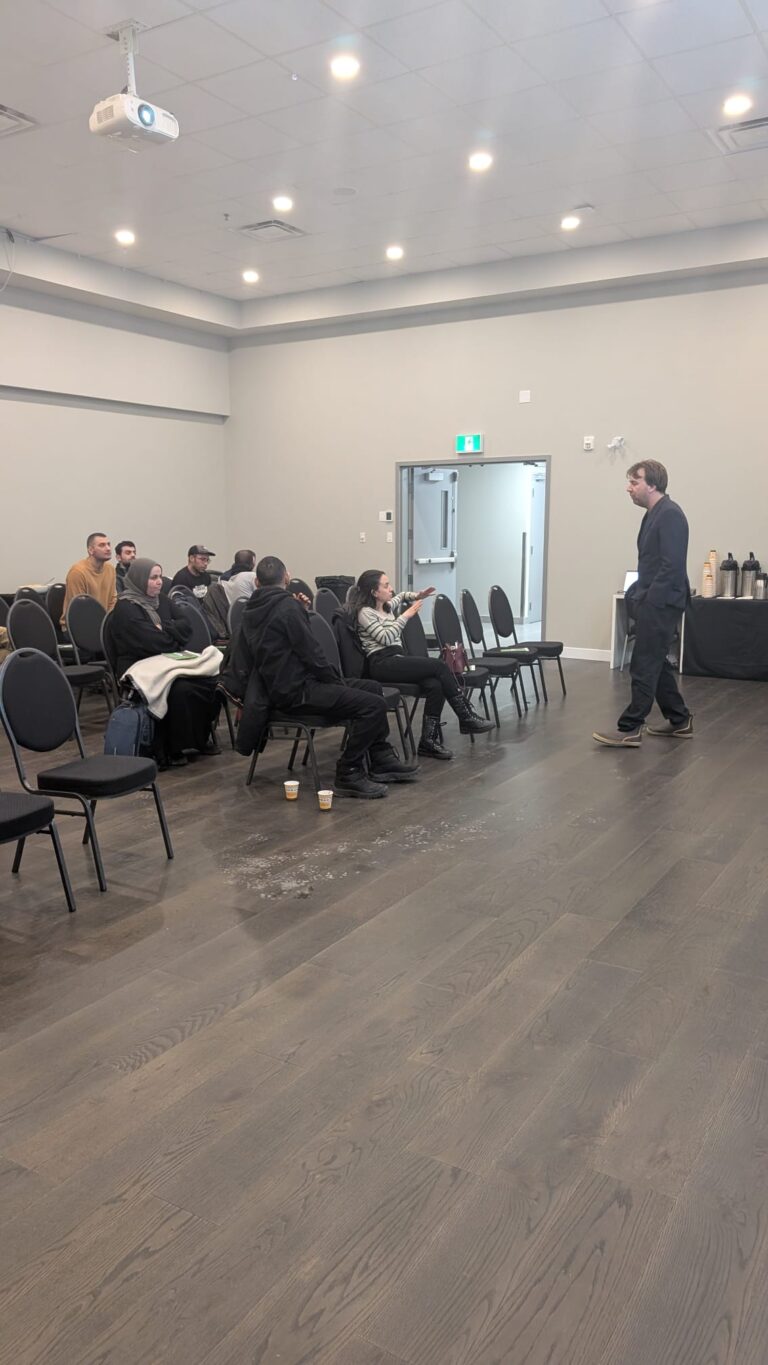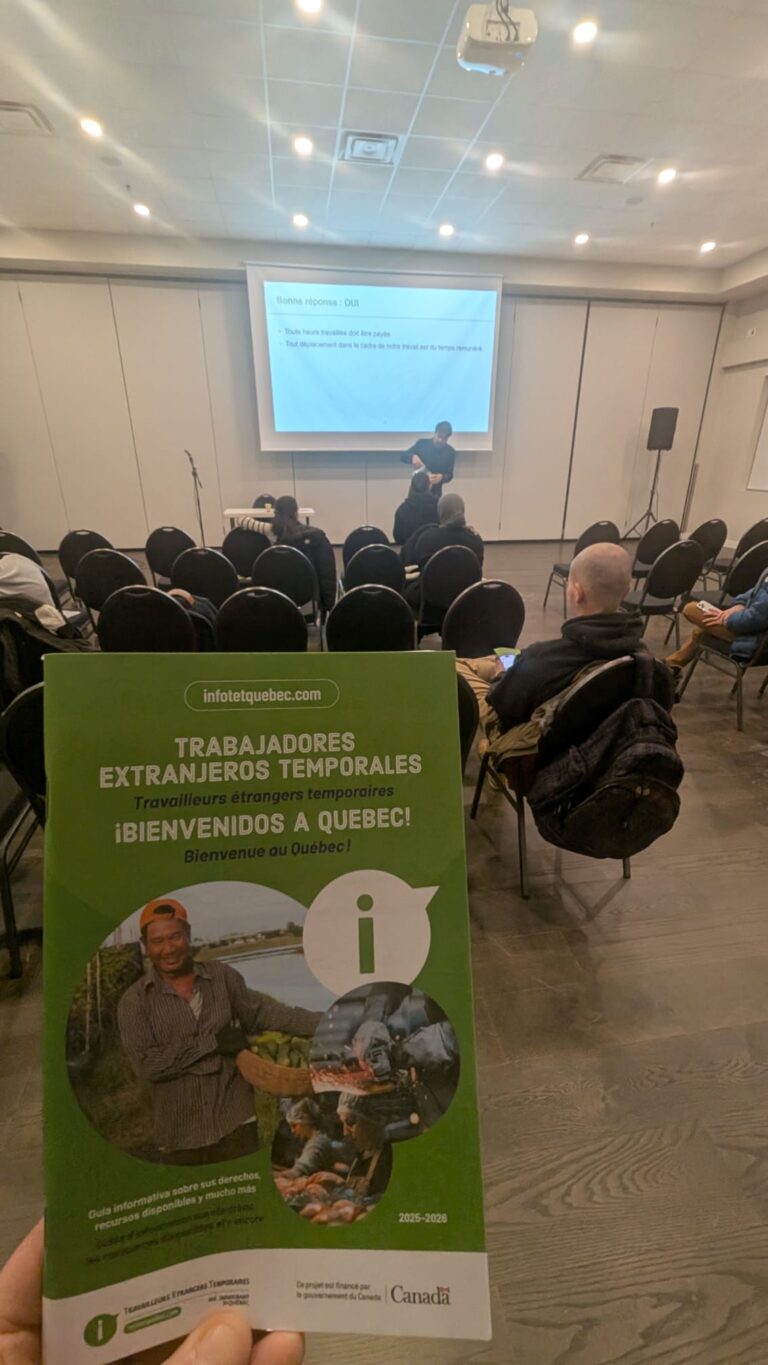


On February 12, at the facilities of CACI (Centre d’appui aux communautés immigrantes) in Montreal, an information session entitled “Minimum Working Conditions in Quebec for Temporary Foreign Workers (TFWs)” was held in collaboration with the CNESST (Commission des normes, de l’équité, de la santé et de la sécurité du travail).
The purpose of this activity was to provide TFWs with practical tools to better understand their rights and responsibilities in the workplace, while promoting a safe and transparent professional environment.
The session was dynamic, interactive, and highly informative. Pier-Luc Bédard, representative of the CNESST, delivered the presentation in a clear and accessible manner, encouraging active participation from attendees. Throughout the session, participants were able to ask questions and share real-life experiences, allowing for discussion of concrete situations that TFWs encounter in their daily professional lives.
Among the most discussed topics:
- Working hours and workdays, explaining legal limits, overtime pay, and how to ensure that conditions comply with the law.
- Reviewing pay stubs and deductions, helping TFWs identify errors or unjustified deductions and understand how wages are properly calculated.
- Tasks actually performed compared to those listed on work permits and employment contracts, in order to detect possible discrepancies between what is required and what is legally established.
The session also provided an opportunity to present the free support services and resources available across the province through the Migrant Worker Support Program (PSTM) of InfoTET d’Immigrant Québec, which are helpful for questions related to working conditions, workplace safety, or any other situation connected to their professional experience in Quebec.
During the activity, Jonathan Buitrago, Regional Coordinator of nfoTET d’Immigrant Québec, took the opportunity to present the InfoTET Québec program and distribute the new edition of the information guide for TFWs, providing practical information and useful tools to better understand their rights, obligations, and available resources. This direct exchange allowed for questions to be answered, experiences to be heard, and the concrete needs of workers to be better understood, reinforcing nfoTET d’Immigrant Québec’s mission to provide clear and useful information to TFWs during their stay in the province.
Many participants expressed that before the session, they were not fully informed of their rights and obligations, and that this workshop gave them access to clear and practical information to better understand real-life situations, such as verifying payments, identifying deductions, and understanding their employment contracts.
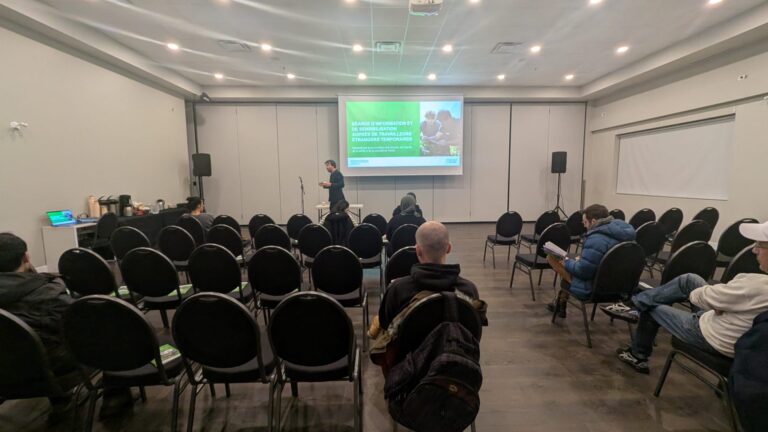
From nfoTET d’Immigrant Québec, we would like to warmly thank Agnes Merlin and Ibtissem Bellakhdher of CACI for the excellent organization of the workshop, as well as Pier-Luc Bédard of the CNESST for his clear, accessible, and engaging presentation, which allowed participants to understand the topics in a practical and straightforward way.
In summary, this workshop not only provided essential information, but also offered TFWs practical knowledge and tools to better understand their working conditions and move forward safely in their professional environment.